Trees and Plants in Mallorca: Olive, Carob, Dwarf Palm and What Grows in the Finca Garden
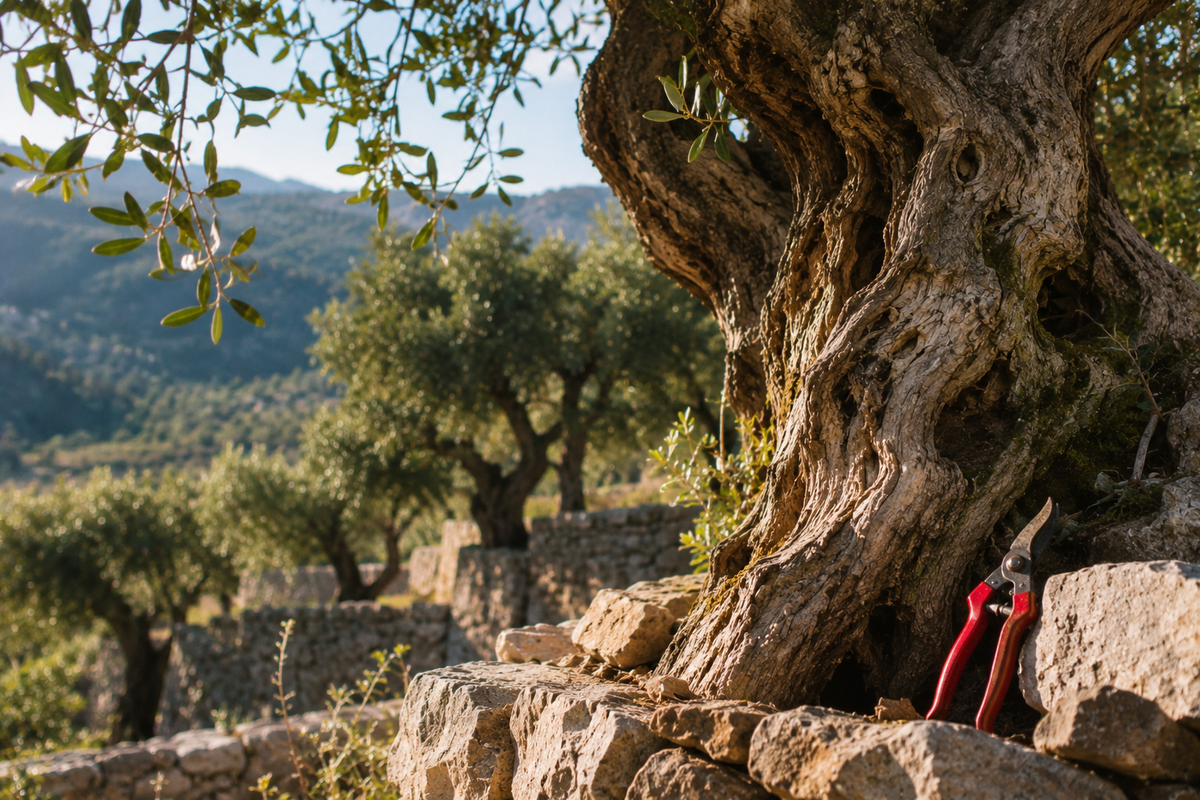
The gnarled tree next to the pool may be older than the house, the village and the church. Olive trees on Mallorca can live for several hundred years. A few were simply left standing when the finca was built, and that was the architect's best decision.
Von Thorsten Kambach3 Min. Lesezeit
In diesem Beitrag 6 Abschnitte
Which trees are typical for Mallorca?
- Olive tree: the island's tree. In the terraces of the Tramuntana, olive trees that have been tended for generations stand with trunks like twisted sculptures. What is made from their fruit: olive oil on Mallorca.
- Carob tree: in Mallorcan garrover. Broad, dark green crown, long brown pods in summer. Formerly animal feed, today a popular thickener in the food industry.
- Almond tree: In February, the island turns white and pink. When and where it is most beautiful: almond blossom on Mallorca.
- Fig tree: often with supports under the wide-spreading branches. Ripe figs are available in late summer.
- Oranges and lemons: especially in the valley of Sóller, which smells of orange blossom in spring. See Sóller.
What grows in the mountains and on the coast?
- Aleppo pine: the pine of the coast, with a light canopy and the scent of resin. It provides shade in many bays.
- Holm oak: the tree of the wetter mountain forests in the Tramuntana. More about the mountain range: Serra de Tramuntana.
- Dwarf palm: in Mallorcan garballó. The only palm species that occurs naturally in Europe. It grows low and bushy on dry slopes, for example on Formentor.
- Mastic bush, cistus, rosemary and thyme: the macchia, which smells so good on hikes. Where it is most beautiful to walk through: hiking on Mallorca.
What blooms in the finca garden?
Bougainvillea in pink and purple on the house walls, hibiscus, jasmine in the evening, lavender, agaves and prickly pears. Many of these plants originally come from America or Asia, but have long been part of the island's image. It blooms most in spring, in August much is dry and still.
Which plants are poisonous?
- Oleander: the pink or white flowering bush on roads and in gardens. All parts are poisonous. Children should not put leaves and flowers in their mouths.
- Prickly pear: not poisonous, but the fine spines on the fruit and leaves stay in the skin for days. Only pick with gloves.
Which animals you may encounter in nature: snakes, scorpions and other animals.
Are you allowed to pick fruit?
In your own finca garden, it is best to ask upon arrival what is allowed. Often lemons or figs are expressly included. Trees by the roadside almost always belong to someone, even if there is no fence. And if you want to plant an olive tree at home yourself: The houses where you get to know it beforehand can be found under fincas in a quiet location.
Frequently Asked Questions
Which trees grow on Mallorca?
Above all olive, carob, almond and fig trees, Aleppo pine on the coast and holm oak in the mountains.
Are there native palms on Mallorca?
Yes, the dwarf palm, in Mallorcan garballó. It is the only palm species that occurs naturally in Europe.
Is oleander poisonous?
Yes, all parts of the plant are poisonous. Children should not touch or put leaves and flowers in their mouths.
When do almond trees bloom on Mallorca?
Mostly from late January to late February, depending on the weather and location.