Most Beautiful Beaches in Mallorca: 14 Beaches and Bays with Honest Tips
Half past eight, the water is still smooth, the only traces in the sand are yours. Two hours later, the same bay is packed with sun umbrellas. On Mallorca, it's not just about where you go to the beach, but above all when.
Von Thorsten Kambach6 Min. Lesezeitaktualisiert
In diesem Beitrag 6 Abschnitte
The island has long sandy beaches, tiny rocky coves, and natural beaches without a single kiosk. Here are Mallorca's most beautiful beaches and coves, sorted by type, each with an honest assessment of parking, access, and the season. In short: For families, Playa de Muro and Alcúdia are the safe bet; for photos, Caló des Moro and Cala Mondragó; for nature, Es Trenc and Coll Baix.
Long sandy beaches
Playa de Muro (North). Fine sand for several kilometres, shallow water, and pine trees and the S'Albufera wetland behind it. Find out more in the Playa de Muro post.
Platja d'Alcúdia (North). The bay continues towards the harbour, with a promenade, restaurants, and plenty of facilities. Find out more in the beaches in the north post.
Es Trenc (South). Undeveloped coastline with dunes and pale sand, one of the few long stretches of beach without a row of hotels. Find out about access, parking, and the best sections in the Es Trenc post.
Right next to Playa de Muro is the Villa Albufera, which accommodates up to 6 guests. Here, the beach is not a day trip but part of everyday life.
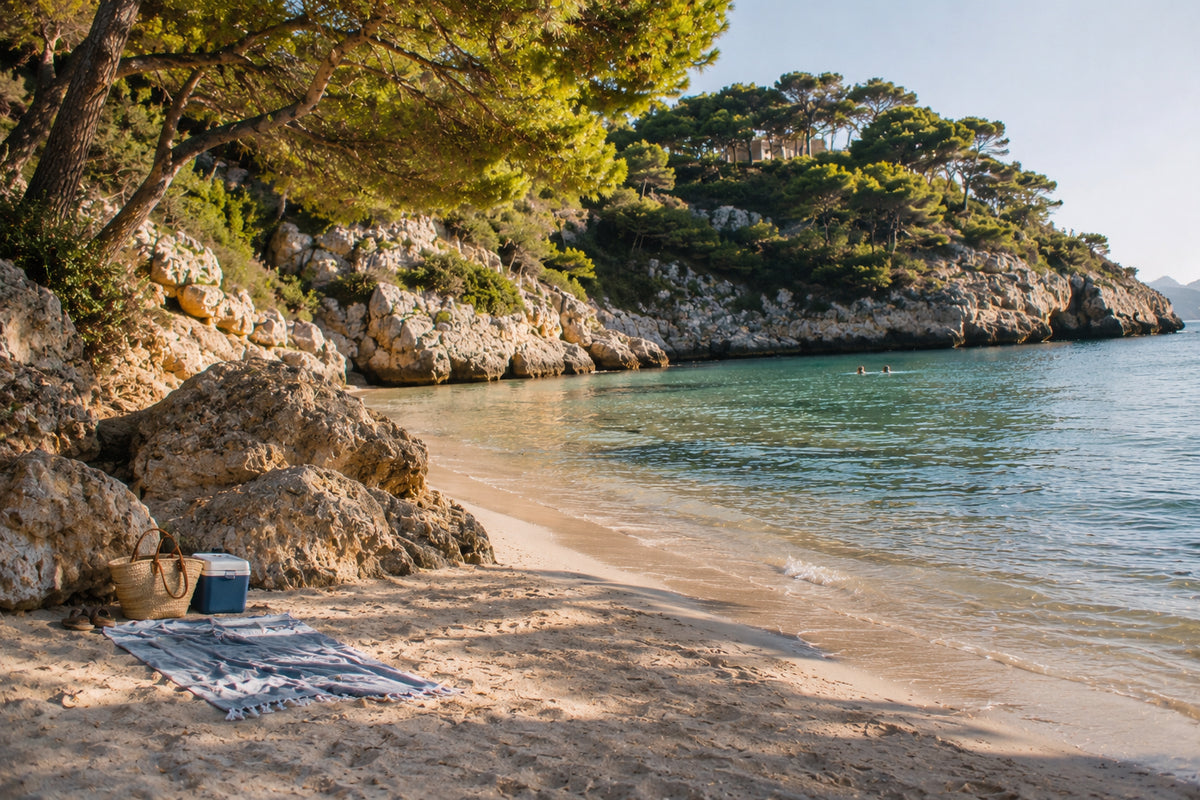
Mallorca's most beautiful coves: small calas
Cala Sant Vicenç (North). Several small coves side by side, with the rocks of Cavall Bernat above them. Clear water, ideal for snorkelling. The coves are small, and space can be limited on summer weekends.
Cala Mondragó (Southeast). Located in a nature reserve, with fine sand and usually calm water, plus toilets, showers, and lifeguards. Since 2024, visitor numbers have been controlled during the high season, and finding a parking space can take time in summer.
Caló des Moro (Southeast). The cove featured in Mallorca calendars. Very small, with access on foot over rocks and limited parking nearby. It is best visited early in the morning or outside the season. Find out more in the beaches on the east coast post.
Cala Llombards (Southeast). A narrow cove between rocky cliffs, with sand and a few boathouses. Quieter than its famous neighbours, but also small.
Cala Agulla (East). A wide, pale sandy beach near Cala Ratjada, surrounded by pine trees. A cala by name, with the facilities of a large beach. Find out more in the east coast post.
For the south, the Finca Rica near Santanyí accommodates up to 8 guests. Mondragó, Caló des Moro and Llombards are all nearby, so you can get there before the tour buses in the morning.
Natural beaches without facilities
No kiosk, no sun loungers, no lifeguard. But plenty of peace and quiet. Bring water, shade, and sturdy footwear.
- Platja des Coll Baix (North, near Alcúdia): A shingle beach beneath steep cliffs. It is about a 25-minute walk from the car park and shelter, with around 160 metres of elevation gain; the return journey in the midday heat can be exhausting. The water gets deep quickly.
- Cala Varques (East, between Porto Cristo and Portocolom): A natural cove accessible only on foot. In 2026, the island council banned wild parking on the old access road. Plan to arrive without a guaranteed parking space.
- Cala Torta (Northeast, near Artà): A wild cove with sand and dunes, accessible via a narrow track. The surf can be strong in windy conditions.
- Torrent de Pareis (Tramuntana): A shingle beach at the end of a gorge, accessible via a path through rock tunnels. Spectacular, but crowded with day trippers during the day. Find out more in the Sa Calobra post.
Family-friendly beaches
For children, shallow water, sand instead of rocks, toilets, and a short walk from the car are what matter most. Mallorca offers these above all at:
- Playa de Muro and Platja d'Alcúdia: shallow, wide, and spacious.
- Platja de Formentor: a narrow strip of sand beneath pine trees, with usually calm water. Note: access is restricted from mid-May to mid-October, and you can only drive there during the day if there are still spaces at the official car park, which has around 300 spaces.
- Cala Mondragó: a sheltered cove with lifeguards and showers.
- Cala Agulla: wide sand and shade beneath the pine trees behind it.
We regularly update the WOW Beach Guide to show which beach is right for you on any given day. Find out more in the child-friendly beaches on Mallorca post, with detailed information sorted by region.
Our advice: how to enjoy the beach almost to yourselves
- Set off early: Arrive at the well-known calas before 10 a.m. It gets crowded from midday.
- Visit in the shoulder season: The water is warm in June and September, and parking is less hectic than in August.
- Check the wind: When it blows from the north, the south is often calmer, and vice versa.
- Don't visit three coves in one day: One good cove and a lovely lunch are better than any beach rally.
- Plan for short journeys: If you live close to the sea, you can go home at midday and return in the evening.
This is exactly why we have properties close to the beach: all fincas by the sea and all fincas with sea views. For example, the Finca Palma Papa in Cala Sant Vicenç accommodates up to 12 guests and is close to the local coves. Find out how far the fincas are really from the water in the finca beach distances post.
Frequently asked questions
What is the most beautiful beach on Mallorca?
There is no single best beach. Es Trenc in the south and Cala Torta in the northeast are considered the most beautiful natural beaches, while Caló des Moro, Cala Mondragó and Cala Llombards in the southeast are the most beautiful coves. For families, Playa de Muro and Alcúdia in the north are the most convenient choice.
Which beaches on Mallorca are good for children?
The shallow sandy beaches in the Alcúdia bay, including Playa de Muro, are particularly suitable, as are Cala Mondragó and Cala Agulla. During the season, these beaches have lifeguards, toilets, and shade nearby.
Where can you find beaches on Mallorca without hotels?
Es Trenc, Cala Torta, Cala Varques and Platja des Coll Baix near Alcúdia are all undeveloped. These beaches usually have little or no facilities, so you should bring your own water and sun protection.
When are Mallorca's beaches least crowded?
They are quietest early in the morning before 10 a.m. and during the shoulder season, around June and September. In July and August, well-known coves such as Caló des Moro become very crowded from late morning.
Is parking easy at Mallorca's coves?
At the well-known calas, parking is often the biggest problem. Access to Cala Mondragó and Formentor is controlled during the high season, while parking options at Caló des Moro and Cala Varques are severely limited. If you arrive early or live within walking distance, you can avoid the search.
